Regional Licensing Variations Shape Game Library Options in Online Gambling
Noah Braun · Oct 31, 2026
Regional Licensing Variations Shape Game Library Options in Online Gambling
Understanding Licensing as a Gatekeeper for Game Availability
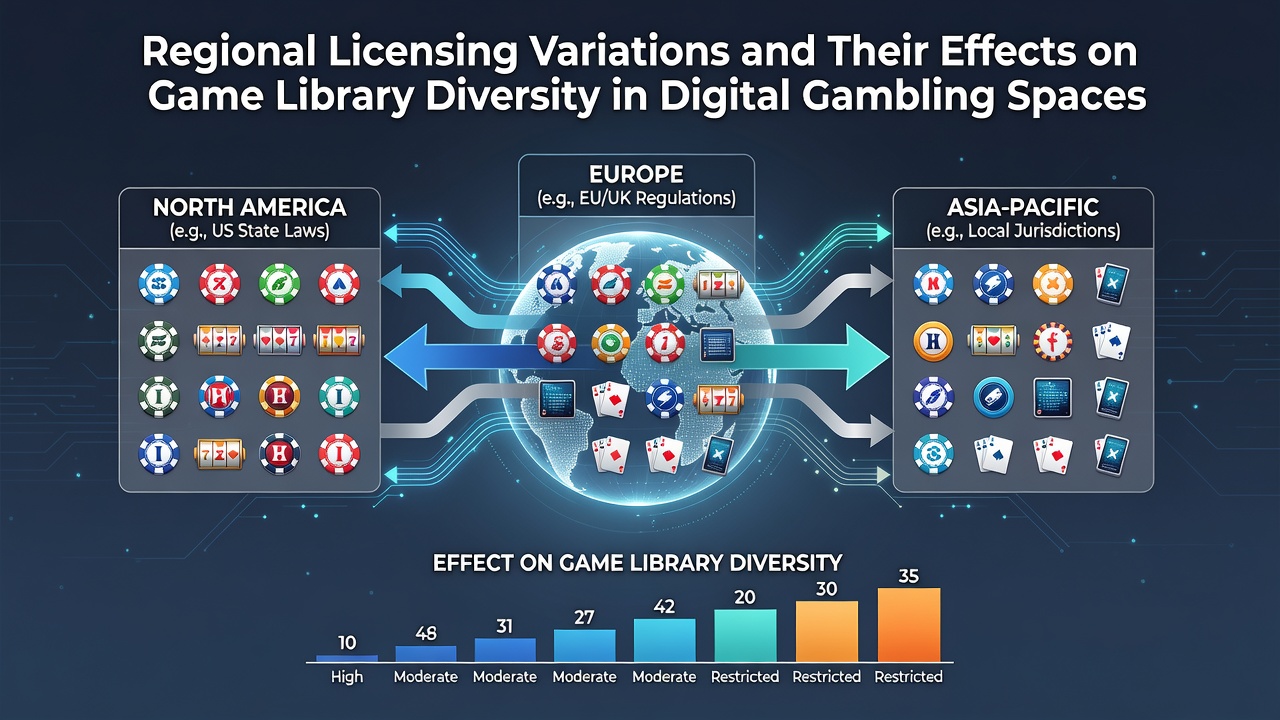
Regional licensing frameworks determine which game providers can operate within specific jurisdictions and which titles appear in player libraries, since each authority sets its own technical standards, content rules, and certification processes. Operators must secure separate approvals for markets such as individual US states, Australian territories, and Canadian provinces, which creates distinct catalogs even when the same software suppliers are involved. Data from October 2026 shows that platforms serving multiple regions maintain separate game pools that differ by an average of 35 percent in title selection, according to figures released by the New Jersey Division of Gaming Enforcement.
These differences arise because licensing bodies require games to meet jurisdiction-specific RNG testing, payout verification, and responsible gaming integration before they receive approval. A slot certified in one area may need additional review or face outright exclusion in another, which fragments the overall selection available to users depending on their location.
How Jurisdictional Rules Alter Specific Game Categories
Live dealer environments illustrate the effect clearly. Some regulators mandate that studios operate inside the licensed territory while others accept remote feeds under strict latency and surveillance conditions, so the number of blackjack, roulette, and baccarat tables varies significantly across platforms. In October 2026 several Canadian provincial authorities expanded their approved live dealer lists after new studio audits concluded, adding dozens of titles that remain unavailable in certain US state markets where in-state facility requirements still apply.
Slot libraries follow similar patterns. Progressive jackpot games often require multi-jurisdictional pooling agreements, and when one region withdraws from such arrangements the jackpot networks shrink and certain high-tier titles disappear from local menus. Research from the Australian Gambling Research Centre indicates that markets with centralized certification bodies retain larger progressive networks, whereas fragmented state-level systems produce narrower selections of jackpot-linked content.
Impact on Provider Partnerships and Content Volume
Game studios decide where to allocate certification resources based on the size and stability of each licensing market. When a jurisdiction maintains lengthy approval timelines or imposes unique technical modifications, providers prioritize other regions, which reduces the speed at which new releases reach players in the slower markets. Observers tracking October 2026 release schedules noted that studios launched an average of 18 fewer titles per month in jurisdictions with extended review cycles compared with faster-track authorities.
Smaller or emerging markets sometimes attract fewer providers because the cost of compliance exceeds projected revenue, leaving platforms with libraries dominated by older or lower-volatility titles. Those who have studied cross-border operator filings report that this dynamic concentrates diversity in larger, more established licensing zones while peripheral regions receive a narrower subset of available content.
Player Access Patterns and Library Fragmentation
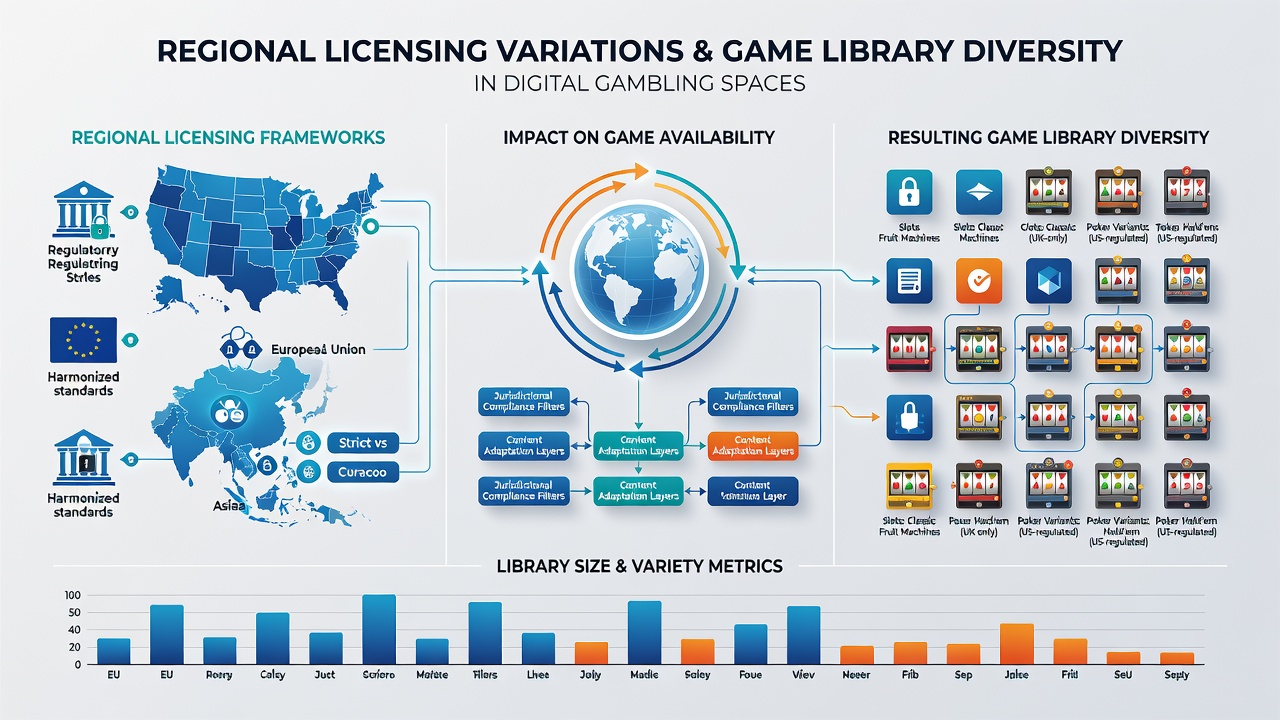
Users who access platforms through different licensing pathways encounter noticeably different libraries even when the underlying operator remains the same. Geoblocking and account-level content filters enforce these distinctions, which means a player registered under one regional license cannot view titles approved only under another. Industry reports compiled by the European Gaming and Betting Association document that multi-license operators maintain at least three parallel game databases to satisfy varying regulatory demands across their footprint.
Payment method integration further compounds the variation, since some authorities restrict certain deposit options that otherwise enable access to specialized game categories such as crypto-based or skill-influenced titles. When those payment channels become unavailable the corresponding games drop out of the visible library, narrowing options for players in affected regions.
Conclusion
Regional licensing variations continue to produce measurable differences in the composition and breadth of digital gambling game libraries, with each authority's certification rules, studio location requirements, and content standards acting as primary drivers. Data collected through October 2026 confirms that operators serving multiple jurisdictions maintain separate catalogs whose overlap ranges from 60 to 75 percent depending on the specific markets involved. These structural differences remain embedded in the operational reality of digital gambling spaces and shape the selection presented to users based solely on geographic and regulatory boundaries.