Understanding Variations in Transaction Processing Times for Mobile Slots and Live Tables
David Schmitz · Oct 17, 2026

Understanding Variations in Transaction Processing Times for Mobile Slots and Live Tables
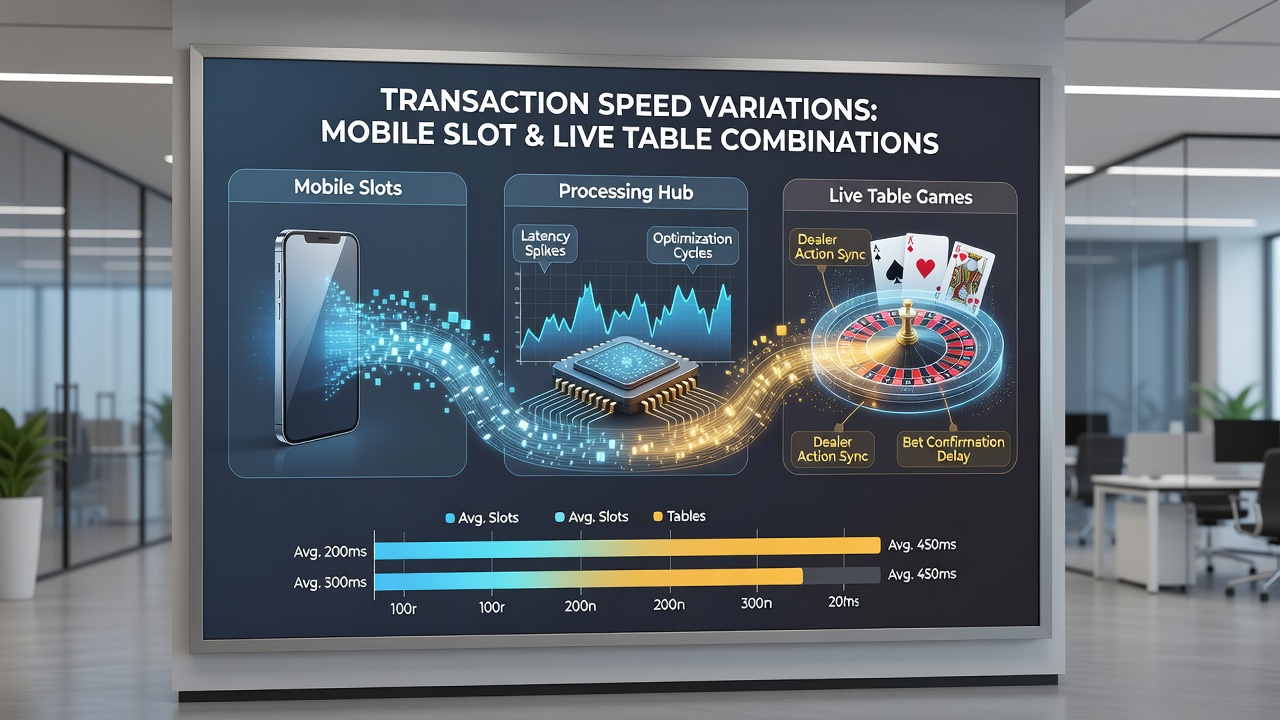
Transaction processing times in mobile casino environments show measurable differences between slot games and live table offerings, driven by distinct technical requirements and operational structures. Observers note that slot transactions often complete in under two seconds on average, whereas live table interactions frequently extend to four or five seconds due to added verification layers.
Data from industry monitoring in October 2026 indicates that mobile slot sessions handle rapid sequences of bets and payouts through automated random number generators, which reduces the need for real-time human oversight. In contrast, live table combinations incorporate video streaming, dealer confirmations, and multi-player synchronization, which introduces additional processing steps.
Core Mechanics Behind Speed Differences
Slot games on mobile platforms rely on client-side calculations for most outcomes, allowing transactions to bypass extensive server round-trips in many cases. Researchers at technology assessment centers have documented that this setup keeps average confirmation times between 0.8 and 1.5 seconds when network conditions remain stable. Live table environments, however, route each action through centralized dealer interfaces and broadcast systems, extending the cycle as multiple data packets travel between the player device, the streaming server, and the game management platform.
Payment integration further amplifies these variations. Mobile slots typically connect to instant wallet functions that authorize small, frequent transfers without additional authentication prompts after the initial session login. Live tables often require repeated balance checks and seat reservation validations, especially during high-traffic periods, which adds 1.2 to 2.8 seconds per transaction according to aggregated platform logs.
Network and Device Influences on Performance
Connection quality plays a central role in observed speed patterns. Studies conducted across North American and European networks reveal that 5G connections reduce slot transaction latency by approximately 35 percent compared with 4G, yet the same upgrade yields only a 22 percent improvement for live tables because of the heavier streaming payload. Device processing power also factors in, with newer chipsets handling simultaneous video decoding and bet placement more efficiently than older models.
One analysis from the Canadian Institute for Gaming Research examined over 12,000 mobile sessions and found that background app activity slowed live table responses more noticeably than slot responses. This occurs because live feeds demand consistent bandwidth allocation, while slot mechanics tolerate brief interruptions without halting the transaction sequence.
Regulatory Data and Regional Patterns
Figures released by the Australian Gambling Regulation Authority in late 2026 showed that mobile slot payout confirmations averaged 1.1 seconds across tested operators, while live table bet settlements reached 3.9 seconds under comparable conditions. Similar patterns emerged in reports from the Malta Digital Gaming Authority, where variations widened during peak evening hours when live dealer rooms experienced higher concurrent user volumes.
Platform operators have adjusted server architectures to address these gaps. Some have implemented edge computing nodes that cache common slot results closer to end users, trimming processing windows without altering live table workflows. These modifications appear in performance summaries published by academic groups tracking digital gambling infrastructure.
Payment Gateway and Security Layer Impacts
Security protocols introduce further distinctions. Mobile slots often employ token-based authentication that persists across multiple spins, allowing seamless transaction flows. Live table sessions require fresh verification tokens for each betting round to comply with jurisdictional rules on real-time wagering integrity, which lengthens the approval chain. A joint paper from the University of Nevada and the Singapore Institute of Technology noted that these layered checks account for roughly 40 percent of the total time difference between the two game categories.
Regional payment preferences also affect outcomes. Operators serving markets with widespread use of instant bank transfers report faster live table settlements than those relying on card networks, because direct bank rails bypass certain intermediary processors. Data compiled through October 2026 highlights that hybrid combinations, where players switch between slot and live table modes within the same session, experience cumulative delays if the payment method does not support rapid mode switching.
Conclusion
Transaction speed variations across mobile slot and live table combinations stem from fundamental differences in game architecture, data transmission demands, and compliance requirements. Available measurements from regulatory bodies and research institutions demonstrate consistent patterns that operators continue to address through targeted infrastructure upgrades. These documented differences provide a factual basis for understanding performance expectations in current mobile casino environments.